The communication gap between booking and check-in
A guest books a luxury villa in Zanzibar. They receive a confirmation email, maybe a PDF with check-in times. Then nothing - until they land at Zanzibar Airport and start searching for the resort address.
That gap can be days or weeks. During that time, the guest is excited, making plans, looking up restaurants and excursions. They are highly engaged - and the hotel is silent. No communication, no upsell, no anticipation-building. The first real touchpoint after booking becomes the taxi ride.
For a property like Xanadu Villas - 9 private pool villas on Dongwe Beach, full-board, positioned among the top 1% of East African luxury resorts - this is a solvable problem.
What we built
Two guest-facing touchpoints that work together: a pre-arrival check-in form that collects what the team needs before arrival, and a personalised arrival card that appears in the guest's browser the moment they submit it. Automated from start to finish. No staff action required.
Step 1: Three days before arrival, the check-in link arrives
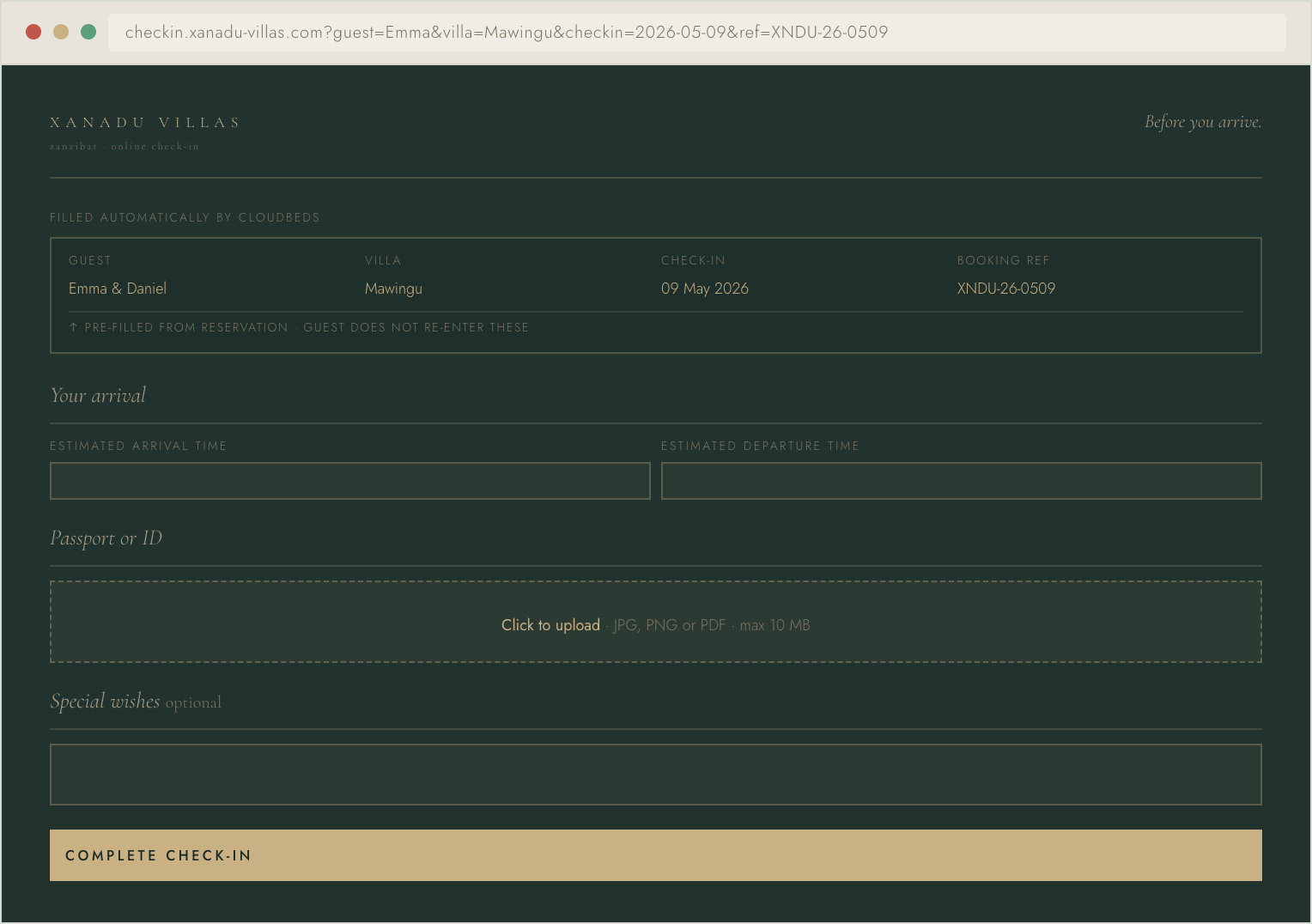
Three days before arrival, Cloudbeds automatically sends the guest a personalised check-in link. The guest's name, villa, and booking dates are already embedded in the URL. The form itself is minimal: guests add only what is still missing - their exact arrival time, a passport upload, and any special wishes.
From the guest's perspective, it takes under two minutes. From the hotel's perspective, everything arrives as a structured note directly inside the Cloudbeds reservation - no manual data entry, no follow-up emails needed.
Step 2: After submission, the arrival card appears
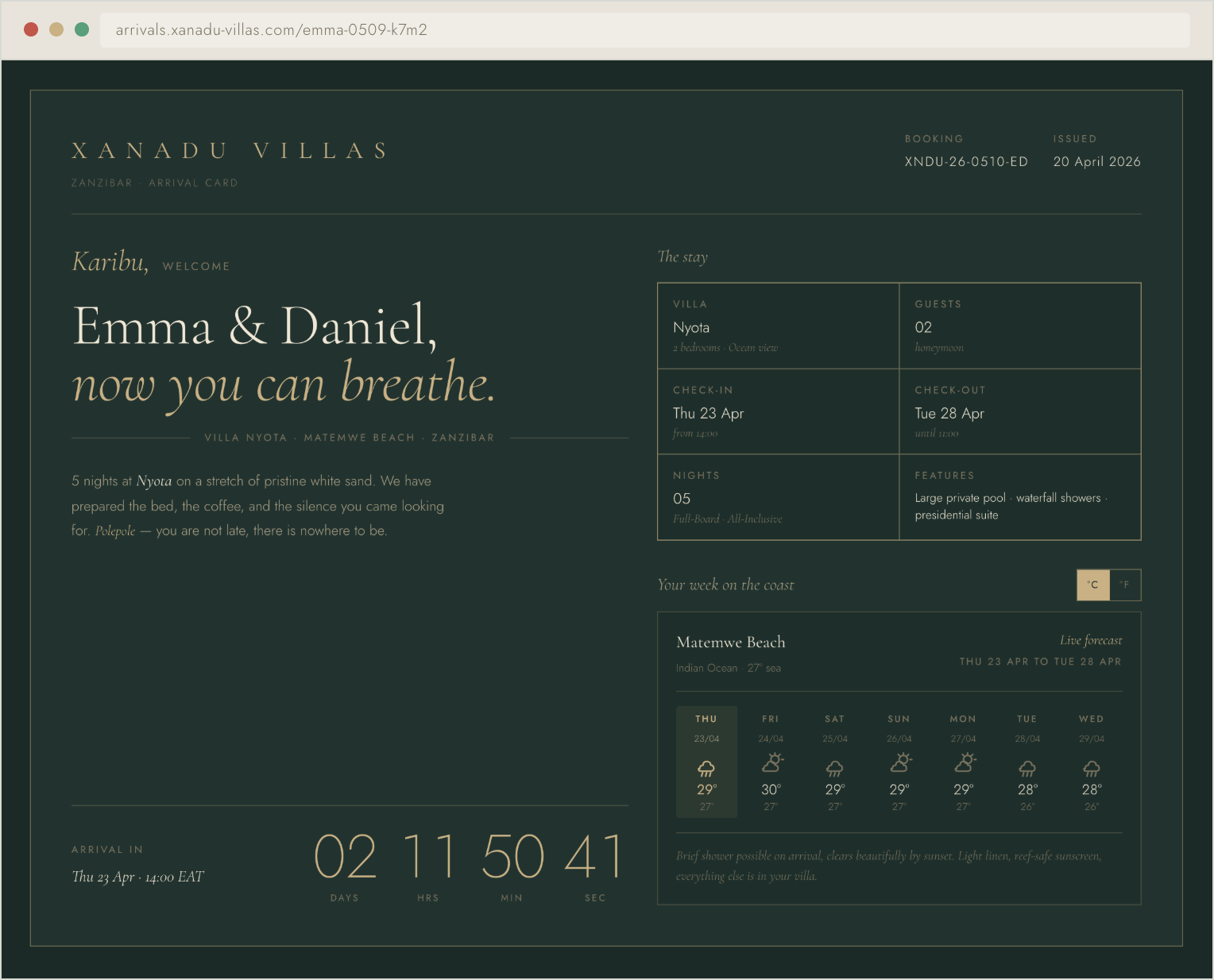
The moment the guest submits the form, the arrival card appears in the same browser window. No app to download, no account to create, no password to remember. It opens directly in mobile Safari or Chrome, like any web page.
The card shows everything a guest needs before they travel: villa name and photo, check-in and check-out dates, a live 7-day weather forecast for Dongwe Beach, and a real-time countdown to arrival.
Step 3: Pre-arrival experiences on the card
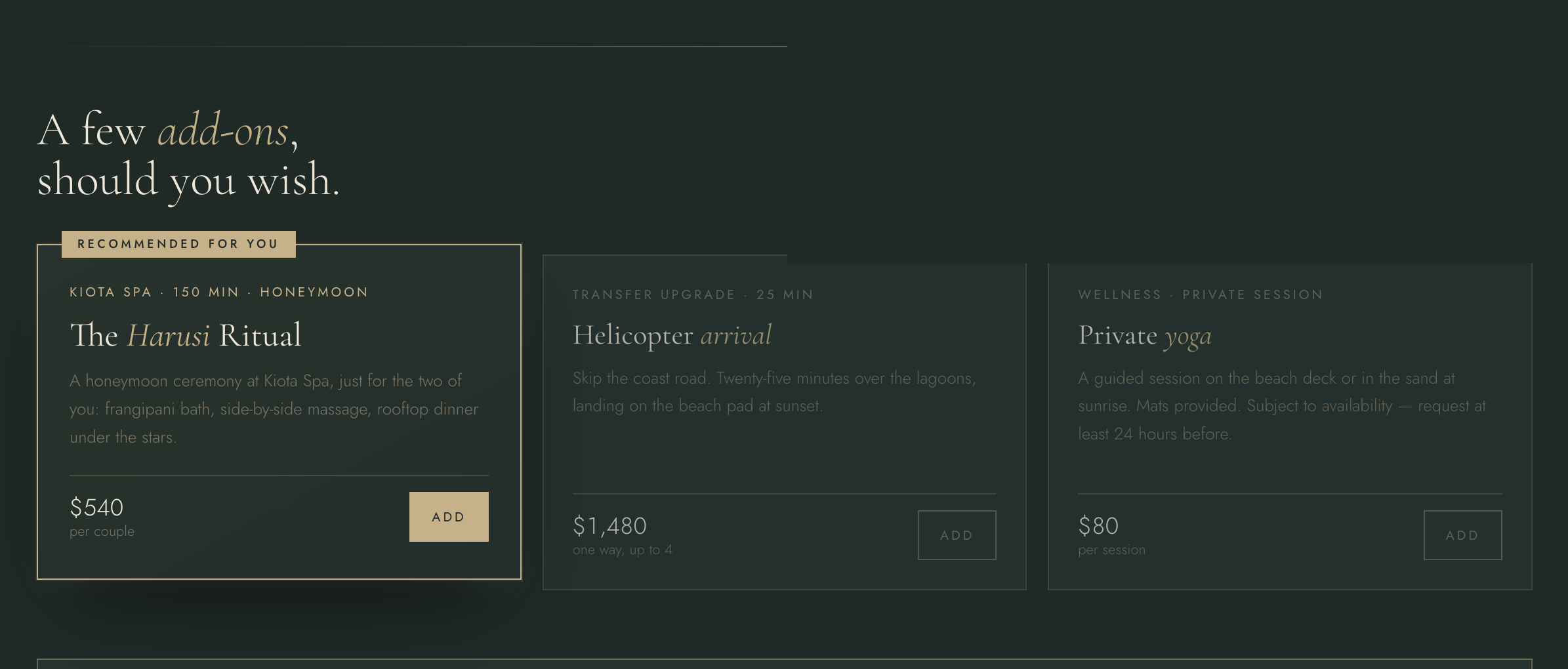
Below the villa details and weather forecast, the card offers a curated selection of experiences the guest can request before arrival: the Harusi Ritual at Kiota Spa (a 150-minute honeymoon ceremony for two, $540), a helicopter arrival that skips the coast road and lands directly on the beach pad ($1,480 one way), and a private yoga session on the beach deck at sunrise ($80).
Guests select what interests them. A running summary builds at the bottom of the card. One tap sends the entire selection to the Xanadu team. No upfront payment, no commitment required. The team confirms availability before arrival and follows up directly.
Technical overview
The system runs on Cloudflare Workers and KV storage. There is no server to maintain, no database to manage, and no hosting bill beyond the Cloudflare Workers free tier, which covers several thousand requests per day. Cards are stored with a 2-year TTL - long enough for guests to revisit their card during the stay.
- Weather data: Open-Meteo API, Dongwe Beach coordinates, 7-day forecast with WMO weather codes
- Card generation: POST request returns a unique slug and shareable URL
- Rendering: server-side HTML, no JavaScript framework, works on every mobile browser
- Deployment: single wrangler deploy command, global CDN, custom domain ready
What this means for other hospitality businesses
Xanadu Villas is a boutique property with 9 villas and a team of under 20. The system incurs no ongoing costs and was live within a day of starting. The same architecture works for a 50-room hotel, a safari lodge, a yacht charter company, or a private members club.
The pattern is always the same: identify the communication gap in your guest journey, build a touchpoint that delivers real value - information, anticipation, personalisation - rather than just marketing, and attach a low-friction upsell to it. The technology is a tool. The insight is the product.